The Science
When an electric current passes through a tungsten filament, it softens at incandescent temperatures. During a crash, the filament is stretched by its own inertia — this is called ‘hot shock’ and indicates the bulb was on. If the bulb were off, the cold rigid filament more often breaks rather than stretches.
Vista’s Advanced Method
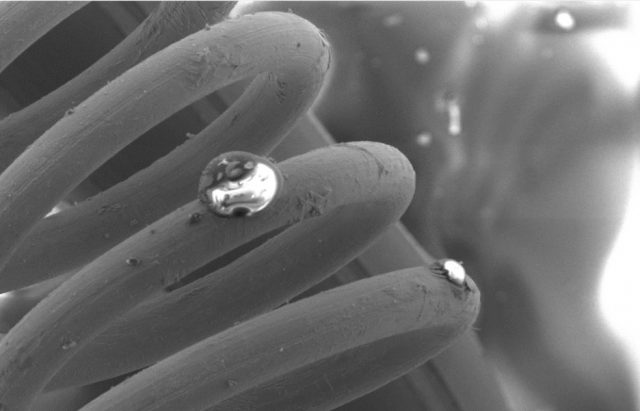
At Vista Engineering, we take this a step further. When examined with a Scanning Electron Microscope, glass or plastic particles that shatter on impact actually melt onto the filament. If particles are observed melted onto the filament, it is further proof that the filament was hot and the headlights were on.
Case Study Summary
- Client collected evidence shortly after the accident without allowing the vehicle to be powered back up
- Vista examined the tungsten coil visually, with an ocular microscope, and with a scanning electron microscope
- Photos were taken and explanation provided describing how evidence displayed signs the headlights were on at the time of the crash